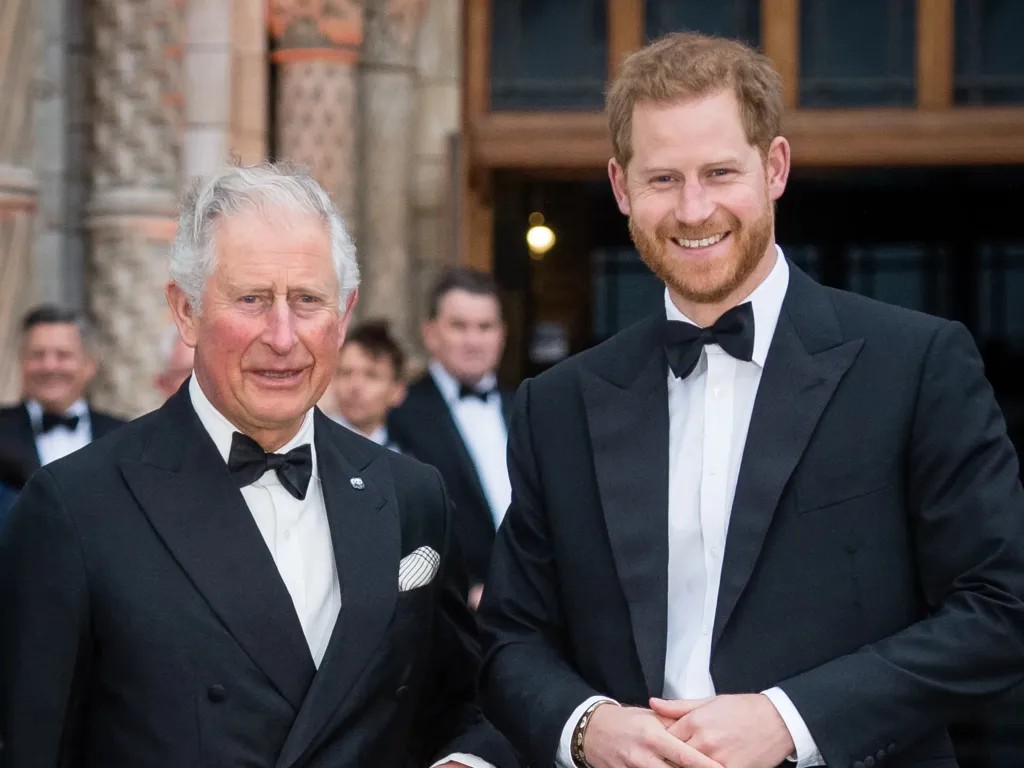
King Charles III and Queen Camilla have arrived in the United States to participate in celebrations marking the country’s 250th anniversary, including a scheduled visit with President Donald Trump. However, amidst the high-profile diplomatic itinerary, a significant personal absence has emerged: there are no plans for the King to meet with Prince Harry and Meghan Markle.
Despite the royal couple’s residence in California, the King’s brief U.S. tour—spanning from Washington, D.C., to New York—contains no provisions for a family reunion with his son or his grandchildren, Prince Archie and Princess Lilibet.
A Tight Schedule and High-Profile Meetings
The monarch’s itinerary appears focused on diplomatic duties and high-society engagements rather than personal reconciliation. After spending two days in Washington, the King and Queen will move to New York, where they are expected to meet with prominent figures such as Anna Wintour and Martha Stewart.
When asked about a potential meeting with the Duke of Sussex, Buckingham Palace officials declined to comment, leaving the silence to speak for itself.
The Roots of the Estrangement
The distance between the King and his younger son is not a recent development but the result of years of escalating tension:
- The 2020 Exit: The rift intensified when Harry and Meghan stepped back from senior royal duties to pursue independent careers in the U.S.
- Conflicting Narratives: While Prince Harry’s 2023 memoir, Spare, drew significant criticism, other accounts—such as Omid Scobie’s Endgame —suggest the responsibility for the breakdown lies more heavily with the institution and the King himself.
- Failed Olive Branches: Prince Harry has made several public and private attempts to bridge the gap. In 2025, he expressed a desire to end the conflict, noting the urgency of reconciliation, and even attempted to coordinate communication through staff members.
Why the Standoff Matters
This ongoing separation highlights a deeper structural issue within the British monarchy. While many observers see Harry as the primary driver of the conflict, palace sources suggest a more complex reality.
The refusal to meet indicates a deep-seated level of distrust. There is a growing sentiment within certain royal circles that the King is hesitant to resolve the issue, potentially due to fears regarding the motivations behind Harry’s outreach. Some insiders suggest the Palace prefers “distance” to maintain stability, even as the personal cost to the family grows.
The impasse suggests that for the Royal Family, maintaining institutional boundaries currently takes precedence over repairing personal familial ties.
Conclusion
The King’s decision to bypass a meeting with Prince Harry during his American tour underscores a profound and unresolved fracture within the House of Windsor. Despite repeated attempts at reconciliation from the Duke of Sussex, the monarchy appears to be prioritizing diplomatic and institutional protocols over family reunification.