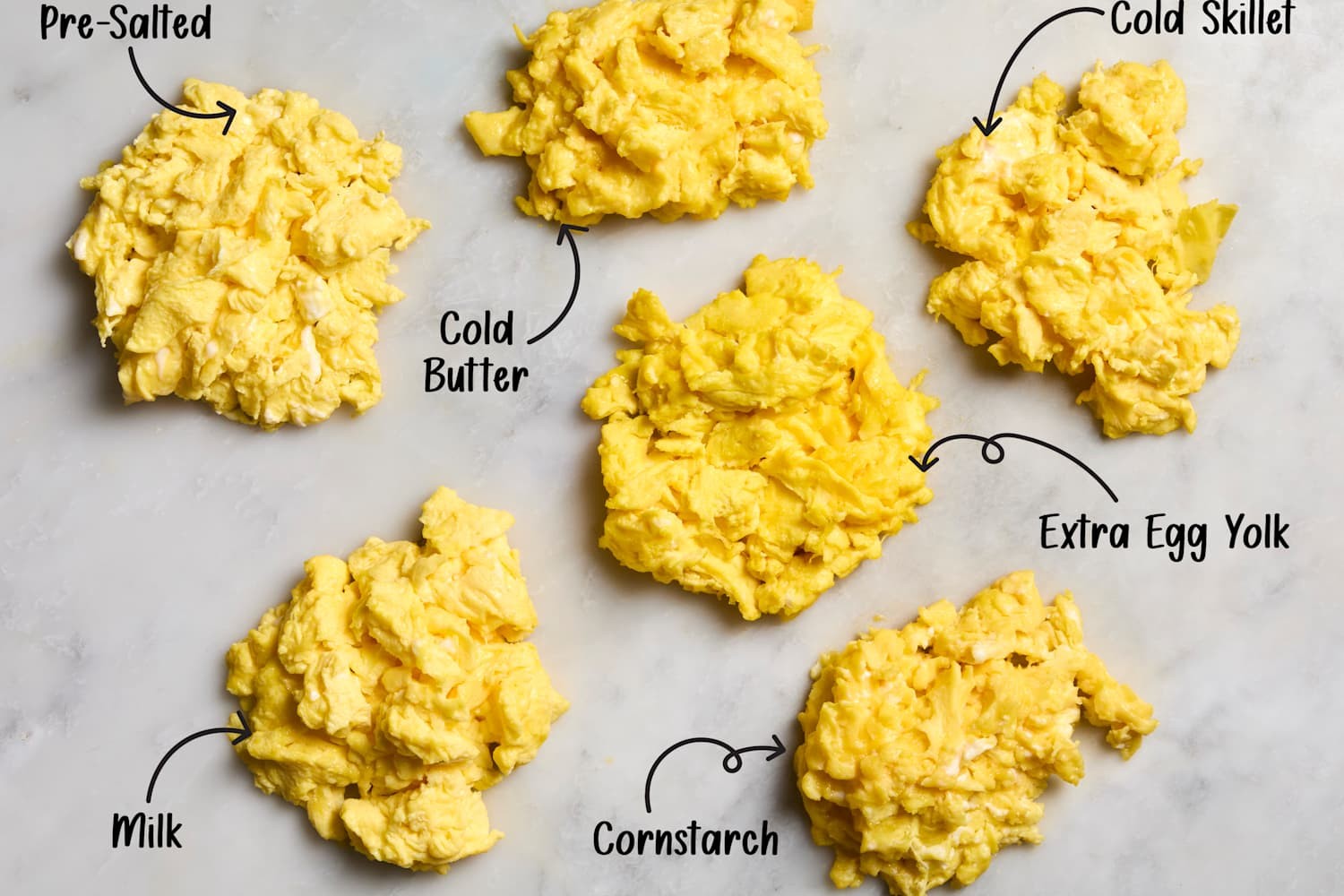
For many, the scrambled egg is the ultimate breakfast foundation. Whether it is folded into an omelet, tucked into a sandwich, or mixed with tortillas for migas, the quality of the scramble dictates the success of the entire meal. However, achieving the “holy grail” of eggs—large, fluffy curds that are moist but not wet, and creamy without being overly heavy —is harder than it looks.
To find the definitive way to cook them, six different methods were tested against a strict set of criteria: texture, flavor, and lack of browning. Here is how the different techniques performed.
The Testing Methodology
To ensure accuracy, all tests used the same variables:
– Ingredients: Two large eggs, 1/4 teaspoon kosher salt, and 1 tablespoon of unsalted butter.
– Equipment: A 10-inch nonstick skillet and a silicone spatula.
– The Goal: A 10/10 rating represents eggs that are soft, creamy, and fluffy with zero browning.
The Results: From “Gluey” to “Dreamy”
❌ The Failures: Cornstarch and Milk
Some popular internet hacks actually fall short in practice.
– Cornstarch (4/10): While intended to create a silky texture, this method resulted in a “gluey” consistency that felt unnatural.
– Milk (6/10): Adding milk produced very fluffy eggs, but it came at a cost. The dairy diluted the natural, rich flavor of the eggs, leaving them tasting “watered down.”
📈 The Runners-Up: Extra Yolks and Cold Butter
These methods moved closer to perfection by focusing on richness and temperature control.
– Extra Yolk (8/10): Adding a third yolk increased the richness and produced a beautiful yellow color and smooth texture.
– Cold Butter (9/10): By adding pieces of cold butter directly to the eggs in a warm pan, the cooking temperature was regulated more slowly. This resulted in an exceptionally creamy and balanced scramble.
🏆 The Winner: The Pre-Salt Method (10/10)
The most effective way to scramble eggs isn’t about what you add to them, but how you treat them before they hit the pan.
The Trick: Whisk your eggs with salt and let them sit for 15 minutes before cooking.
Why it works: This is a matter of food science. Salt acts on the egg proteins, preventing them from bonding too tightly as they cook. This results in a much more tender, moisture-retaining curd. The result is a perfect balance: the eggs are firm enough to hold large, fluffy curds, yet incredibly creamy and flavorful.
What About a “Cold Start”?
One final test looked at cooking eggs in a cold skillet (7/10). While this method takes longer, it produces much smaller curds because the eggs tend to cling to the pan more frequently. For those who prefer a fine, almost porridge-like texture, this may be an option, but for most, a hot start provides better texture and less mess.
💡 Pro-Tip for Your Morning Routine
Since the winning method requires a 15-minute rest period, use it to your advantage. Whisk your salted eggs first, then use that time to toast your bread, brew your coffee, or prep the rest of your breakfast. Cook the eggs last, and you will have a professional-grade meal every time.
Conclusion: If you want the fluffiest, most flavorful scrambled eggs possible, skip the milk and cornstarch; simply salt your eggs 15 minutes before they hit the pan to transform their texture through science.