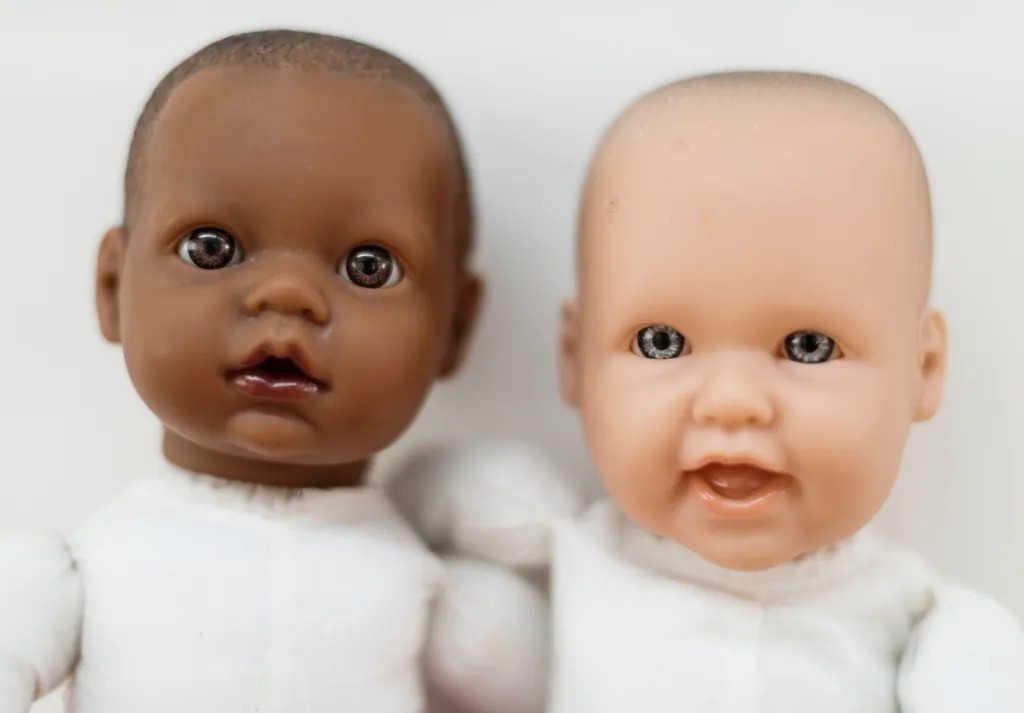
The internet’s mood for the week has shifted. We are no longer scrolling past outrage. Instead, we’re stopped dead by a three-year-old boy and a baby doll.
Sylas, from Pennsylvania, has taken over social media. Not because he’s doing a backflip. Not because he’s reciting poetry. But because he is practicing caregiving with an intensity that makes adults pause. His mother, Mary, shared a reel capturing Sylas’s journey from Target to bedtime routine. The clip has already hit four million views.
That number isn’t just a vanity metric. It’s a signal. People are hungry for this.
Sylas doesn’t just hold the doll. He inhabits the role. The video shows him selecting a baby doll at the store. A genuine smile breaks across his face. He carries it to the car. On the drive home, he feeds it a bottle. Real bottle. Real focus.
Once home, the routine continues. He bathes the baby in the sink. He feeds it dinner. He tucks it in, pushing his own bedtime back by thirty minutes because the doll’s schedule comes first. The smile never leaves his face.
“He isn’t going to be ‘feminine,’” one commenter noted. “There is nothing more ‘masculine’ than a present father!”
This isn’t just cute. It’s disruptive to traditional gender norms.
Mary’s caption highlighted the real-life sacrifice: swim lessons were cut short or delayed to accommodate this ritual. The internet responded with a wave of support, dismantling the outdated idea that dolls are strictly for girls.
Followers pointed out that letting boys engage in pretend play serves a deeper purpose. It normalizes male caregiving. One user argued that criticizing this behavior keeps the problem alive.
“Taking care of a baby is not a gendered things, or at least it shouldn’t be,” they wrote.
The comment section became a manifesto on fatherhood. People see Sylas as a prototype. A glimpse into a future where men are equally equipped for the emotional and logistical labor of parenting. It’s not about becoming “soft.” It’s about becoming capable.
The Viral Loop of Positive Parenting
The story didn’t stop with the original post. In fact, that was just the spark.
Mary posted another video. This time, Sylas was in the throes of his daily routine again. Bathing. Feeding. Playing.
Mary admitted she didn’t expect the first video to blow up. She appreciated the positivity. But more than that, she highlighted the skill development happening in real-time. These are life skills. Skills that children, boys and girls alike, should learn.
Sylas is currently exploring these responsibilities through the proxy of his baby doll.
The audience wanted to participate. They wanted to support. So, Mary set up an Amazon wish list. Fans could send dolls and accessories.
This wasn’t a charity drive. It was a community rallying around a child’s interests.
Next week, a video emerged from Costco. Sylas pulls a wagon. Inside? Three baby dolls. He maneuvers them through the aisles with pride. Two shoppers actually recognized him from the viral videos. He’s becoming a minor celebrity in the world of wholesome content.
Unpacking the Impact of Male Caregiving Representation
Why does this matter beyond the likes and shares?
Because representation shapes behavior. When young boys see their peers engaged in caregiving play, the taboo weakens. The association between masculinity and neglect of domestic labor begins to fracture.
Mary’s followers aren’t just praising Sylas. They’re validating his mother’s choice to allow this freedom.
One commenter speculated that Sylas might grow up to be an exceptional foster parent. The kind you’d want kids sent to. Another joked about a baby shower. These jokes aren’t mean-spirited. They’re affirmations.
The joy is palpable. It’s authentic. Sylas isn’t performing for the camera. He’s engaged in the work.
We often worry about what our kids will become. Sylas shows us what happens when we let them be who they are without imposing restrictive boxes. He is learning empathy. He is learning patience. He is learning that nurturing is a universal skill, not a gendered one.
And as for the rest of us? We’re left smiling, maybe feeling a little lighter, wondering when we decided that holding a bottle was a feminine act.
Probably around the same time we decided to forget what fathers were actually supposed to do.
The doll sits on the shelf. The wagon is empty for now. But the conversation it started is far from over.