We live in a culture that has decided that body hair is wrong. As a result, women spend hours soaping and scraping hair from their legs and underarms, and buy countless products to make the process less painful. It’s a ritual. But shaving your armpits is a particular nightmare. The angle is uncomfortable. You can’t see what you’re doing. The armpit has to be shaved with the non-dominant hand, which makes for a strangely clumsy stroke.
Result? Irritation. Razor burns. Rashes. It’s an uncomfortable place for red, rough skin. Even if you don’t nick yourself, the consequences can be serious. So how do you avoid the burn while performing a socially necessary duty? Dermatologists and cosmetic giants have spent millions trying to figure this out. Here are five ways to keep your underarms smooth and pain-free.
Why you should shave at night
Shaving is a small trauma. The blade opens thousands of microscopic incisions in your skin. They usually get better quickly. The problem is what happens right after. Shave. You put on deodorant. You’re sweating.
Deodorants and antiperspirants are chemical cocktails. They contain perfumes, aluminum salts and other ingredients that burn when they come into contact with open skin. Antiperspirants naturally clog pores to prevent sweating. This means they will penetrate deeper into the little grooves you just created. Add sweat to the mix and you have a breeding ground for bacteria. Moisture and darkness are their friends.
Shaving just before going to bed at night will help you avoid immediate consequences. You don’t run in the heat. You don’t sweat profusely. Your skin has hours to heal while you sleep. In the morning, the cuts are closed. Finally, when you use deodorant, it hits intact skin, not raw tissue. Less sweating after shaving means less bacterial irritation. It’s simple logic, but most people ignore it.
Shower Method
Shaving in the shower isn’t just about convenience. It’s all about preparation. Hot water softens the hair. Soft haircuts cleaner. Cleaner cuts mean less drag. Less tugging means less microtears in the skin.
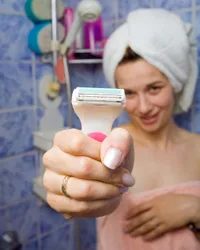
Why Timing Your Shower Shave Matters
You might assume the steamy warmth of a shower is the ultimate ally for a smooth shave. It does soften the hair, sure. But there is a right way and a wrong way to handle this routine, and getting it wrong means dealing with stubble you didn’t ask for.
The key? Get it done early.
Here is the physics of it: after about ten minutes under hot water, your skin swells. The heat and moisture expand the tissues. If you shave during this swollen phase, you are cutting hair that is currently elevated by puffiness. When that heat fades and your skin returns to its normal, unswollen state, the hair retracts. You wake up or head back into the day with visible stubble because you shaved the “swell,” not the base.
And don’t forget your tools. A damp razor is a bacterial playground. Bacteria thrive in moist environments, and since you want to keep those underarms clear of irritation and infection, your blade needs to air-dry completely between uses. Don’t let it sit in a humid shower caddy.
How Often You Change Your Razor Defines Your Skin Health
Freshness isn’t just about comfort; it’s about safety. Dermatologists generally recommend swapping out blades every two weeks, or after roughly five shaves. Why? A dull blade doesn’t cut; it drags. It forces you to press harder or go over the same spot multiple times. That extra pressure and friction is a direct ticket to razor burn and ingrown hairs.
If you are debating between blade types, multi-blade razors often win out for underarm care. The delicate skin under your arms is sensitive. Fewer passes mean less wear and tear. You get that close, clean finish without the abrasion a single-blade razor might demand from you.
Permanent Hair Removal: Laser vs. Electrolysis
For those ready to stop the cycle of shaving entirely, there are two main paths to permanent hair removal: laser hair removal and electrolysis. They work differently, but the goal is identical — no more hair, no more razor burn.
Electrolysis is the only method the FDA recognizes as truly permanent for all hair types. It involves inserting a tiny electrode into each individual hair follicle. That electrode delivers a short electrical pulse that destroys the follicle’s ability to regenerate. It is tedious. It takes time. But it works. Every hair, every time.
Laser hair removal plays a game of contrast. The laser targets the pigment (melanin) in the hair follicle. Dark hair absorbs the light and heat, destroying the root, while the surrounding skin remains untouched. This is why it works best on dark hair and light skin. If you have dark skin, it can still work, but it requires more expertise. If you have blonde, red, or gray hair, the laser has nothing to target, and this method will likely fail for you.
Both options come with a steep price tag. Expect to pay between $100 and several hundred dollars per session. And don’t expect one visit to fix everything. Most people need seven or more sessions to see full results, depending on the skill of the technician and your individual hair growth cycle.
Follow Directions
Whether you are dabbling with a disposable razor or investing in a permanent clinic, ignoring the instructions is a fast track to irritation. Read the manual. Follow the aftercare. Your skin is telling you something — listen to it.

Most of us just grab a razor and get started, relying on muscle memory more than technique. This works until the armpits become a patchy, itchy landscape of ingrown hairs. The problem isn’t your razor. It’s the geography of your armpit.
There, the hairs do not grow in one direction, like on the legs. It grows in multiple vectors and creates a tangled mess when you’re trying to shave in straight, parallel lines.
The solution is surprisingly simple: use a T-shape.
Start at the top of the armpit. Shave down the middle. Then switch to horizontal strokes and shave the entire area from side to side. This captures the hair no matter which direction it grows.
Pull the skin taut. Flatten it out. If the surface is uneven, the blade will skip, pull or cut too close, resulting in razor burn or stubborn red bumps.
And let’s debunk the biggest personal hygiene myth: shaving doesn’t make hair grow back thicker. It doesn’t. It’s just the blunt tip of the hair shaft that catches the light and creates the illusion of roughness.
Some deodorants and creams do the opposite. They can soften the hair and making it grow back finer and lighter. So shave as often as necessary. Just stick to the “T” method.
1: Read the ingredients
Before you even touch the razor, look at what your skin already has. Or better yet, see what you want to apply to raw, sensitive skin.
The armpit area is a biohazard zone for irritation. It’s warm. It’s dark. It constantly rubs off on your clothes. Add sweat and bacteria and you have a recipe for inflammation.
Many conventional deodorants contain aluminum, alcohol and synthetic fragrances. Aluminum blocks sweat ducts. Alcohol dries the skin. Fragrances are the most common cause of contact dermatitis.
If you shave regularly, the skin barrier is compromised.
You need products that soothe, not fight.
Look for these ingredients:
–Aloe Vera : Soothes and moisturizes.
–Shea butter : Restores lipid barrier.
–Chamomile : Reduces redness and inflammation.
–Vitamin E : heals and protects.
Avoid:
– Alcohol denat (drying, stinging)
– Synthetic fragrances (perfume, paraffin)
– Parabens (preservatives that can irritate sensitive skin)
– Baking soda (high pH disrupts the skin’s natural acid mantle)
Your armpits don’t have to smell like a botanical garden. You must be healthy. Healthy skin naturally sheds bacteria. No need for chemical warfare.
Try a simple, unscented deodorant first. See how your skin reacts. If it itches, burns or breaks out, stop using it immediately. Your skin is talking. Listen to it.
The goal is not to mask odors with chemicals. It’s about manage the environment so that odor doesn’t develop in the first place. Shaving helps. But choosing the right products is also important.
Start small. One change at a time. See what works
That burning sensation? It’s probably not a blade.
Think about it. You are gentle. You use a sharp razor. Yet your skin is still rebelling. The culprit is often hiding in plain sight on your bathroom shelf. Shaving cream or deodorant can be a real enemy.
Many of these everyday products are loaded with harsh ingredients. Alcohol is common. It dries your skin instantly. Then there are the scents. They look pretty on the label, but can cause contact allergies. Especially if your skin is already rough from shaving. These small, invisible incisions become gateways to irritation. Chemicals just aren’t for everyone.
Stop using everything for a while. Clear the table.
Apply hydrocortisone cream to the area. Do this for a few days. Let the inflammation subside. When you’re ready to shave again, switch to an alcohol-free lotion. Look for aloe vera. It softens the skin. It soothes the sting.
Deodorants are more difficult. You have to try.
Some people react to aluminum in antiperspirants. Others cannot tolerate the smell of deodorants. Just start. Choose a product with the fewest added fragrances. Test it. See what your skin can handle. You need to balance underarm care with your sweat and odor needs. There is no universal answer.
Don’t forget your wardrobe.
Tight shirts made of synthetic materials trap sweat. They promote the growth of bacteria. This leads to even more irritation. It’s a cycle. Loose cotton shirts are the best choice. Let the skin breathe.
You can find more information about taking good care of your skin from the links on the next page.
Lots of other information
Related HowStuffWorks articles
-
How to choose the right razor blade
-
Which hair removal method won’t harm my skin?
-
Is a reusable razor or a disposable razor really cheaper in the long run?
-
How to even out your skin tone
-
How Botox works
-
How to make a face mask
-
Can vitamins protect my skin from the sun?
Sources
-
Cosmo staff. “Questions and answers about beauty.” Cosmopolitan, August 2009. Vol. 247, No. 2, p. 88.
-
Day, Doris. “Ask about health.” Health, October 2008. Vol. 22, no. 8, p. 30.
-
Day, Doris. “Questions and answers.” Redbook, August 2007. Vol. 209, No. 2, p. 64.
-
Goins, Lisa. “Bare Essentials.” In Style, Spring 2009. Vol. 16, No. 4, p. 181.
-
Scirrotto, Julia. “Bare Essentials.” Marie Claire, July 2009. Vol. 16, No. 7, pp. 140-142.