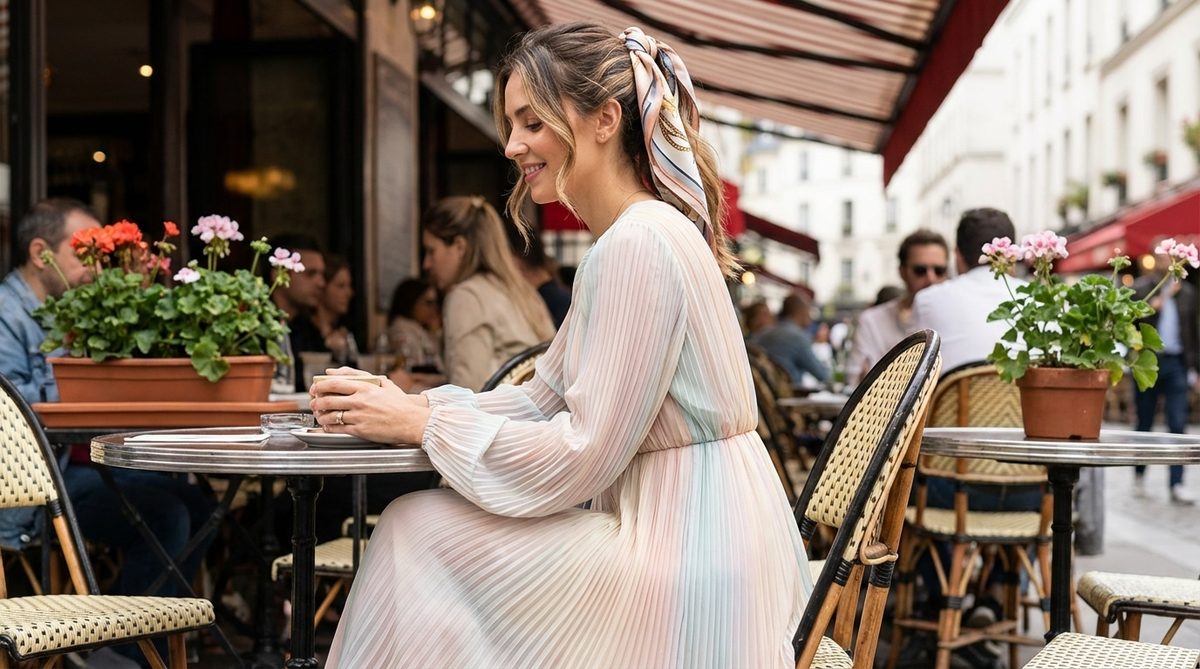
Spring is here. The sun is out. And suddenly, the streets are flooded with pleated dresses. It feels inevitable. One minute you are wearing heavy knits, the next, everyone seems to be draped in fluid fabric that catches the wind like a sail. The pleated dress is the undisputed star of the season. It promises to flatter every body type. It is supposed to be magic.
But there is a trap.
Eight out of ten women break the visual harmony of their silhouette without even realizing it. They ignore the optical laws of the garment. The result is a wardrobe disaster. You feel bulky. You feel weighed down. You look nothing like the effortless muse in the catalog. Why does this happen? And more importantly, how do you fix it?
The Secret Battle of Permanent Pleats
The mystery of this dress lies in its construction. It is not just a drape. It is a technical textile feat. The pleats are permanent, fixed deep into the fiber. There are three main schools of thought here, and they behave differently.
First, you have the sun pleat. It flares out gently, radiating around the body like light. It is soft. It is forgiving. Then there is the accordion pleat. It is rigid. Mathematical. Modern. It demands precision. Finally, there is the Fortuny pleat. It is dense. Almost crumpled. Capricious.
These vertical grooves impose geometry on your posture. They dictate the drape. Get the type wrong, and the dress fights you. Get it right, and it moves with you.
Why Fabric Choice Dictates Your Presence
You cannot treat all pleated dresses the same. The fiber matters. A lot.
If you want the pleats to last without requiring constant dry cleaning, polyester is your best friend. It holds the shape. It resists time. Crepe is another option. It has a finely granular texture that catches spring light beautifully. It feels expensive to the touch. Satin offers a different kind of luxury. It is liquid. Fluid. It moves like water.
Stay away from heavy canvases. If the fabric feels thick, put it back. The dress should slip through your fingers. It should dress you with poetry, not armor.
The Fatal Error of Wrong Pleat Width
Here is where most women stumble. The width of the pleat changes your entire visual proportion. This is the 1cm pleat rule that separates success from failure.
If you choose pleats smaller than one centimeter, you are creating ultra-efficient vertical guiding lines. Your eye travels up and down these tiny ridges instantly. It elongates the leg. It stretches the silhouette. You look taller. Leaner. This is the secret weapon for extending your line without suffering in stiletto heels.
Conversely, pleats wider than two or three centimeters are a stylistic suicide for many. They trap air. The moment you take a step, the fabric inflates. It explodes outward. You add dangerous volume around the hips and buttocks. Your pelvic width looks thicker under that giant accordion. It swallows your shape.
The Empire Waist Miracle for Hourglass Figures
Do you have a softer midsection? A classic hourglass or “O” shape? The pleated dress can be your savior, but only if the cut is right.
Look for an empire waist. The pleats must start just below the bust. This ingenious cut shifts visual interest to the upper body. It skims over the stomach area with elegance. It does not cling. It does not highlight the “problem zone.” It ignores it.
The fabric falls freely from there. It caresses your curves without emphasizing them. It respects your body instead of trying to hide it under a shapeless sack. The result is feminine. Breathable. Controlled.
Mistakes That Kill Your Spring Potential
You have the right dress. Now, do not ruin it with the wrong shoes.
Heavy urban hiking shoes or clunky ankle boots will crush the lightness of the fabric. It is a visual clash. The airy textile cannot handle the rudeness of bulky footwear. Instead, opt for soft loafers. Delicate sandals. Discreet ballerinas. These shoes anchor the outfit without erasing its poetic lightness. They keep you grounded.
Also, stop over-accessorizing. The pleated dress tells a loud story on its own. Its structure is enough to dress a woman from head to toe. Adding a wide, barbed belt cuts the waist visually. Layering on exuberant jewelry creates noise.
Keep it simple. A woven basket bag. A few minimalist rings. Let the fabric speak. It is demanding enough on its own.
The Verdict
The pleated dress is not just a trend. It is a test of understanding. You are not just wearing cloth. You are wearing geometry. You are playing with light and shadow.
Most women fail because they treat it like any other skirt. They ignore the physics of the pleat. They choose the wrong width. They pick heavy fabrics. They pair it with the wrong shoes.
But when you get it right? When you choose that sub-centimeter pleat? When you find the empire cut that floats just above your hips? It works. It feels like flying.
The challenge is not finding the dress. It is understanding what the dress asks of you. And then, giving it exactly that. Or letting it fall, heavily, at your feet.
Balance the bodice against the spacious hem
The bottom of a pleated dress is a visual event. It captures the eye, dominates the horizon and demands space. The top half needs to take a step back. Don’t amplify the noise.
Avoid boxy blazers with stiff shoulders. Those bulky sweaters that distort your silhouette are over. They fight against the dress instead of complementing it. Instead, look for restraint. A thin cardigan works. A timeless heathered knit top from a vintage store calms the energy.
The goal is to frame the shoulders. This construction softens the explosion of hem volume. It gives the outfit a anchor. Without it, it seems to float away.
Choose lengths that respect your gait
Cutting a dress at the knee is a mistake we stopped making years ago. It creates a truncated, dated effect. Think lampshade, not elegance.
True Grace lives in a midi or ankle length version. Aim for a hem that falls mid-calf. Or go full theater with an ankle-grazing cut. With both options, the fabric moves with you. The additional material wraps your stride in a delicate rhythm. This makes a simple walk in the sun look purposeful.
Anti-Chic Checklist: What to Avoid
Let’s be clear. Pleats are not a license for chaos. There are amateur mistakes that ruin this trend instantly.
Stop randomly mixing patterns. If you have wider hips, avoid wide, stiff pleats in this area. They add width where you might not want it. Forget flashy jewelry that conflicts with the intellectual, structured nature of pleats. Rough fabrics are also a hard no. If the material generates static electricity or rubs uncomfortably, it will make your day miserable. The fabric should feel good on the skin.
According to body type and fabric width
This is where the mirror becomes your best friend. Take an honest look at yourself.
If you have a slim, straight body, wide pleats can positively emphasize your silhouette. They add movement to the thin line. If you have a curvier body, lean towards subtle, narrow pleats. Look for a design that starts just below the bust. This empire waist is forgiving. It emphasizes the smallest part of the upper body and allows the fabric to flow over the hips.
The key is in the geometry. Understand how fabric behaves when moving. Choose a fluid crepe. Respect the width of the folds in relation to your body. Use an empire waist to free up the center of your body.
You don’t just wear a dress. You master the technique. When you get the drape right, the visual tricks of the fabric work for you, not against you. You leave behind the fear of fashion mistakes. You start the season with confidence.
The sidewalk awaits. Are you ready to make it tremble?