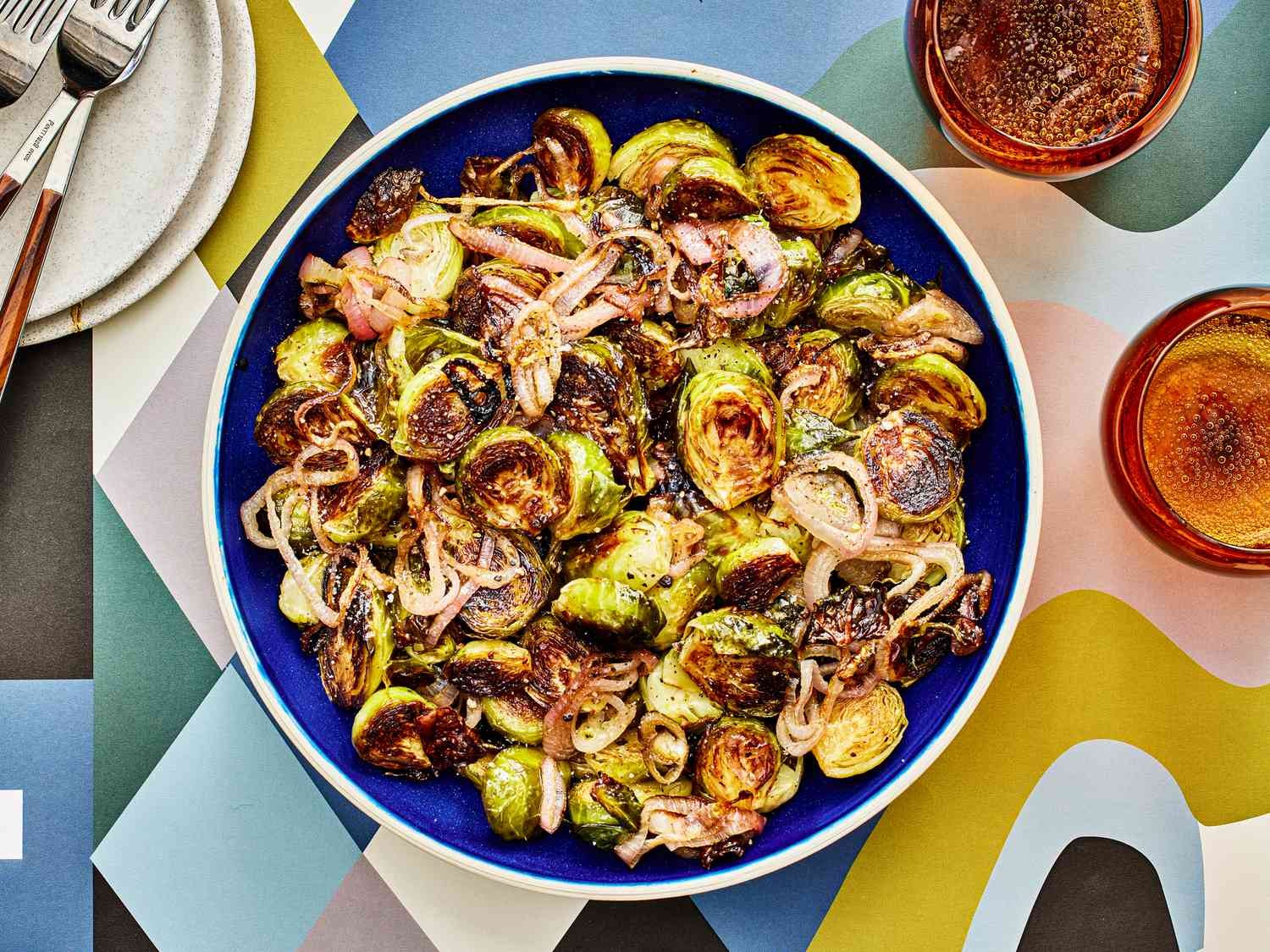
Most home cooks focus on oven temperature and timing when roasting vegetables, striving for that ideal balance between golden-brown crispness and burnt bitterness. However, a surprising truth often goes overlooked: the pan itself plays a critical role in the final result. This isn’t just about having a surface to hold food; the material, thickness, and color of your roasting vessel fundamentally alter how heat transfers, impacting browning, texture, and even whether your dish succeeds or fails.
The Experiment: Brussels Sprouts as a Test Case
To demonstrate this effect, a recent test used Kenji López-Alt’s high-heat roasted Brussels sprouts recipe—a notorious challenge in precision cooking. The recipe calls for a blazing 500°F (260°C) oven and direct contact between sprouts and metal, maximizing browning. This unforgiving method exaggerates even minor differences in pan performance, making it ideal for controlled comparison.
Three pans were used: a cast iron skillet, a carbon steel roasting pan, and a standard foil-lined aluminum baking sheet. The recipe remained unchanged; only the vessel varied. The results were stark.
Results: From Golden Perfection to Bitter Blackness
The foil-lined aluminum sheet produced sprouts exactly as expected – deeply caramelized, crisp at the edges, and tender inside. The carbon steel pan browned aggressively, with some edges nearing burnt territory. But the cast iron skillet proved disastrous, turning sprouts blackened and bitter within minutes. This shows that the recipe operates on a razor’s edge, and the pan’s material determines whether you land on golden perfection or charred ruin.
Why Material Matters: The Physics of Heat Transfer
This isn’t random; it’s physics. Every surface in an oven emits and absorbs infrared radiation. Different materials interact with this radiation differently, a property measured by emissivity.
- Cast iron, dark and matte, has high emissivity (0.6–0.7). It acts like a heat sponge, absorbing and radiating energy intensely, perfect for searing but dangerous at high roasting temperatures.
- Carbon steel is intermediate, heating faster but also cooling quicker due to its thinner profile. Its dark surface still absorbs heat aggressively, but the thinner metal distributes it unevenly.
- Shiny aluminum and foil have low emissivity (0.1–0.3), reflecting radiation instead of absorbing it. This results in gentler, more controlled heating, ideal for recipes where precise browning is crucial.
Essentially, dark, dull metals radiate heat like radiators, while shiny metals act like mirrors. The cast iron and carbon steel ran “hotter,” while the foil-lined tray reflected much of the energy away, explaining the difference in outcome.
Mass and Thickness: The Second Layer of Influence
Beyond emissivity, a pan’s mass and thickness matter. Cast iron’s heft means it retains heat even after the oven door opens, continuing to cook food. Aluminum sheds heat quickly, preventing overshoot. This difference can be critical in high-heat recipes where a few seconds can mean the difference between golden and burnt.
Conclusion: The Pan is Not Just a Container
The pan is not a passive vessel; it’s an active participant in the cooking process. Recipes specify pan materials for a reason—timing and temperature are calibrated for that surface. Switching pans alters the heat equation. If you consistently under- or overcook vegetables, consider whether the pan itself is the culprit. Understanding this dynamic allows you to fine-tune your results, ensuring that every roast reaches its full potential.