In the modern MAGA movement, political loyalty is increasingly being measured by physical appearance. What began as superficial commentary from Donald Trump has evolved into a broader ideological weapon used to disparage political opponents and signal tribal belonging.
The Cult of “Hotness” in MAGA Culture
For Donald Trump, physical attractiveness is more than a compliment—it is a metric of value. From praising “perfect specimens” like pilots to publicly ranking celebrities like Sydney Sweeney and Taylor Swift on his Truth Social platform, Trump has elevated “hotness” to a core ethos.
This fixation has trickled down into the movement’s rhetoric, where being the “hotter” party is framed as a way to “own the libs.” Several prominent conservative figures have adopted this “Hot or Not” approach to politics:
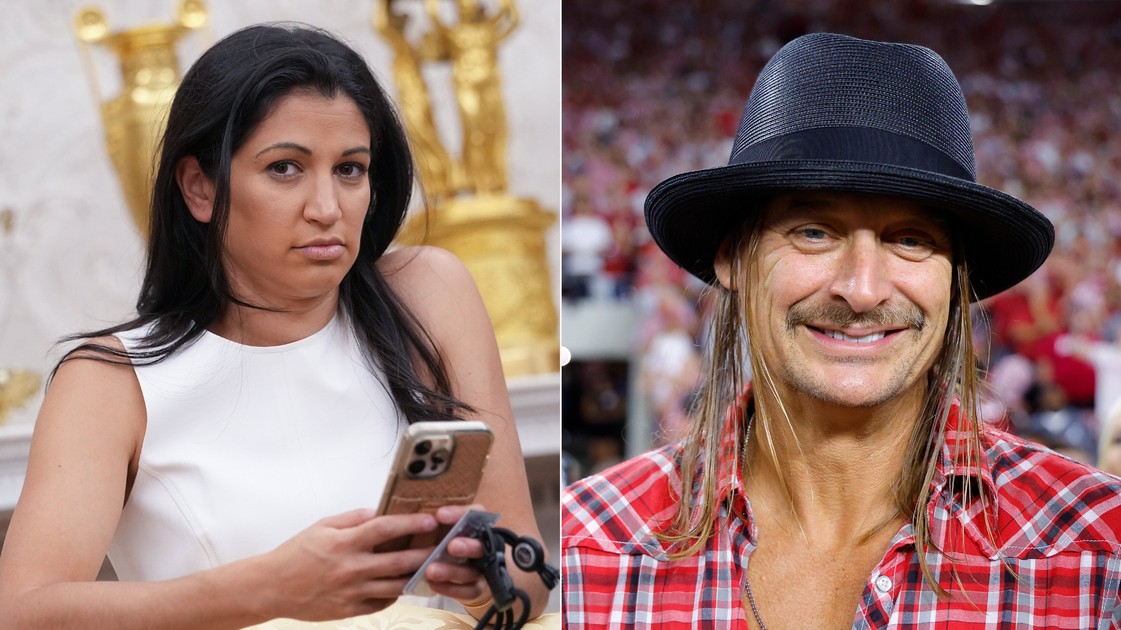
- Katie Miller, a political adviser, recently suggested that liberal men are inherently unattractive.
- Kid Rock has blamed “ugly liberal women” for declining birthrates.
- Tomi Lahren and other commentators have used physical disparagement to dismiss feminist and liberal viewpoints.
The Strategy of Disparagement
This tactic is not new; it is a revival of a century-old trope used against suffragettes and feminists. By labeling liberal women as “ugly,” “shrill,” or “unattractive,” the movement employs a psychological tactic to delegitimize their arguments.
According to Dan Cassino, a professor of government and politics, this serves a specific purpose: it dismisses political criticism as “sour grapes.” The underlying logic suggests that women who reject traditional roles—such as marriage and domesticity—do so only because they lack the “sexual market value” to secure a partner through traditional means. If a woman is deemed unattractive, her political agency is treated as a byproduct of her perceived social failure.
Appearance as a Signal of Loyalty
Beyond attacking opponents, the emphasis on beauty serves as a way for MAGA supporters to signal their commitment to the movement.
Historian Einav Rabinovitch-Fox notes that because Trump prioritizes appearance over substance, his followers feel a need to “win” the beauty war to justify their power. This has manifested in:
– The “Mar-a-Lago face”: A specific, highly maintained aesthetic that signals status within the movement.
– Performative grooming: The time, money, and effort spent on a specific look act as a visual shorthand for political alignment, much like wearing a red MAGA hat.
Darker Implications: Eugenics and Social Hierarchy
The obsession with “good genes” and physical perfection raises significant concerns regarding the resurgence of eugenicist thought. The intersection of MAGA rhetoric with “pronatalism”—the push to increase birthrates—and Trump’s frequent mentions of genetic superiority suggests a worldview where human value is tied to biological aesthetics.
While there is some sociological basis for the “halo effect”—the phenomenon where attractive people are perceived more positively and may lean toward conservative views—the political application of this concept is increasingly aggressive.
“You’re ugly” remains one of the oldest schoolyard taunts, but in the hands of modern political influencers, it has become a sophisticated tool for social and political exclusion.
Conclusion
The MAGA movement’s fixation on physical attractiveness functions as both a weapon to delegitimize feminist critiques and a tool for tribal signaling. By framing political opposition as a matter of “unattractiveness,” the movement seeks to reduce complex ideological debates to superficial social hierarchies.