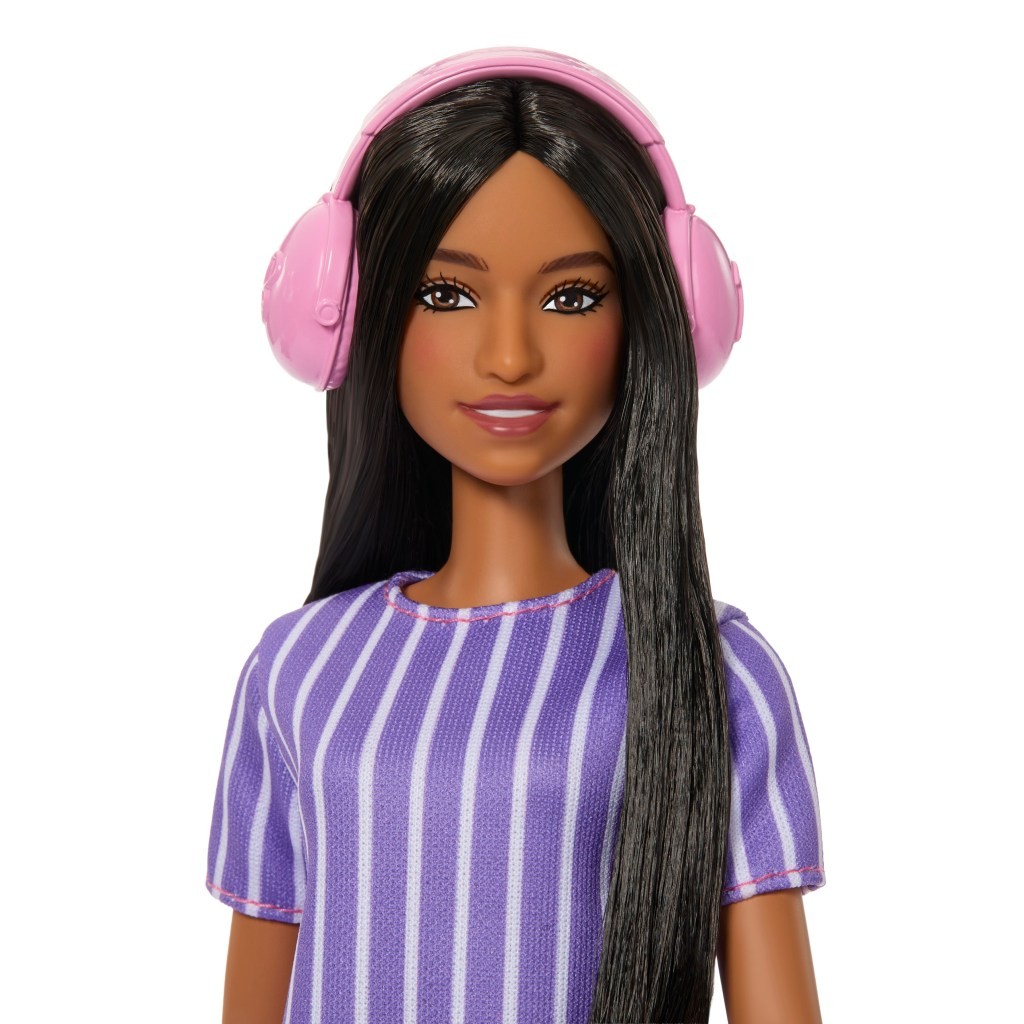
Mattel has introduced the first Barbie doll designed to represent autistic individuals, developed in collaboration with the Autistic Self Advocacy Network (ASAN). This move expands the brand’s commitment to inclusivity, ensuring that a wider range of children can see themselves reflected in the iconic toy line.
Key Features and Design Choices
The new Barbie includes several features intended to accurately depict common autistic experiences:
- Articulated wrists enable the doll to perform stimming behaviors (repetitive movements like hand flapping) – a natural way many autistic people process information or express emotions.
- A slightly averted gaze is incorporated to reflect that some autistic individuals avoid direct eye contact.
- Accessories such as noise-cancelling headphones, a fidget spinner, and a tablet with AAC apps provide sensory support and communication tools.
- Loose-fitting, sensory-sensitive clothing addresses the importance of comfortable, non-restrictive materials for autistic children.
The Importance of Representation
Mattel and ASAN emphasized that the doll is not meant to define autism but rather to showcase its diversity. As ASAN stated, “autism doesn’t have just one look.” The goal is to validate the experiences of autistic children, fostering self-acceptance and reducing feelings of isolation.
The doll is part of the Barbie Fashionistas line, which already includes dolls with conditions like blindness, Type 1 Diabetes, and Down syndrome.
Positive Reception
The launch has been met with overwhelmingly positive feedback, particularly from autistic individuals and their families. Many have expressed gratitude for the accurate and respectful representation, with one parent calling it “literally everything we could have asked for.” Another fan shared that the doll “feels like being seen in a way I never was as a kid.”
This initiative is significant because it directly addresses a gap in toy representation. For autistic children, seeing themselves reflected in mainstream media – even in the form of a doll – can be profoundly validating. This helps to normalize autism and reduce the stigma surrounding neurodiversity. The move also highlights the growing demand for more inclusive toys and the importance of listening to autistic voices in product development.