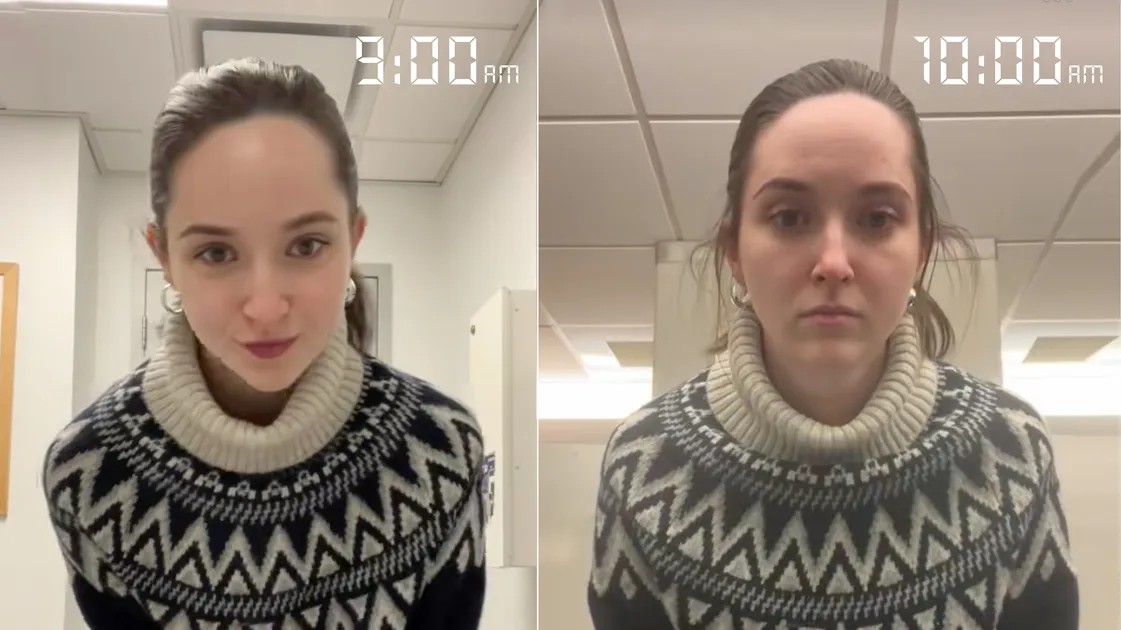
The experience is relatable to many workers: you leave the house looking presentable, but hours into the workday, something shifts. Skin gets oilier, hair falls flat, and you start to wonder if you’re imagining things. This feeling, dubbed “office air” on TikTok, suggests that workplaces actively degrade one’s appearance over time.
The Viral Trend and Shared Experiences
Noa Donlan, a corporate employee, documented this experience in a series of viral TikToks. Her posts showed the stark contrast between her morning freshness and the noticeable deterioration throughout the workday. The posts resonated widely, with commenters sharing similar experiences: “I look like a sick Victorian child by lunch,” one user wrote, while others described feeling both greasy and dry simultaneously.
The trend taps into a broader sense of workplace fatigue. Workers across industries report feeling physically and mentally drained by their jobs, and many believe the office environment exacerbates this. The question is, is there any truth to this feeling?
What Experts Say: Biology, Not “Air”
Dermatologists dismiss the idea of a mysterious “office air” as a causal factor. Dr. Zakia Rahman, a clinical professor of dermatology at Stanford University, explains that the changes people notice are likely tied to natural circadian rhythms. Cortisol fluctuations and oil production vary throughout the day, leading to greasier skin and more visible lines.
Gravity also plays a role: fluid retention in the face decreases when standing, making wrinkles more apparent. Makeup application can further contribute to these changes as sebum interacts with products over time.
The Real Impact of Poor Indoor Air Quality
While “office air” might not make you look worse overnight, poor indoor air quality does impact health. Stuffy, poorly ventilated offices can cause dry skin, itchy eyes, fatigue, and dizziness. Studies show that workers in buildings with good air quality perform up to 26% better on cognitive tests, even after accounting for salary and education.
Measuring the Air: A Scientific Approach
If you suspect your office air is affecting your health, experts recommend using a CO2 sensor to measure carbon dioxide concentration. High levels indicate inadequate ventilation. Researchers also suggest comparing how you feel on in-office versus remote workdays to rule out placebo effects.
Mitigating the Effects
Staying hydrated, using a humidifier, and getting enough sleep can help lessen the impact of dry office air. Donlan herself notes these strategies can make a difference.
Ultimately, while “office air” might not be a mystical force, the experience it describes is real. Working long hours under fluorescent lights can take a toll on physical appearance, and the underlying conditions of many workplaces are still far from ideal.
The reality is that work environments can wear people down—not in some supernatural way, but through the cumulative effects of stress, poor air quality, and biological rhythms.