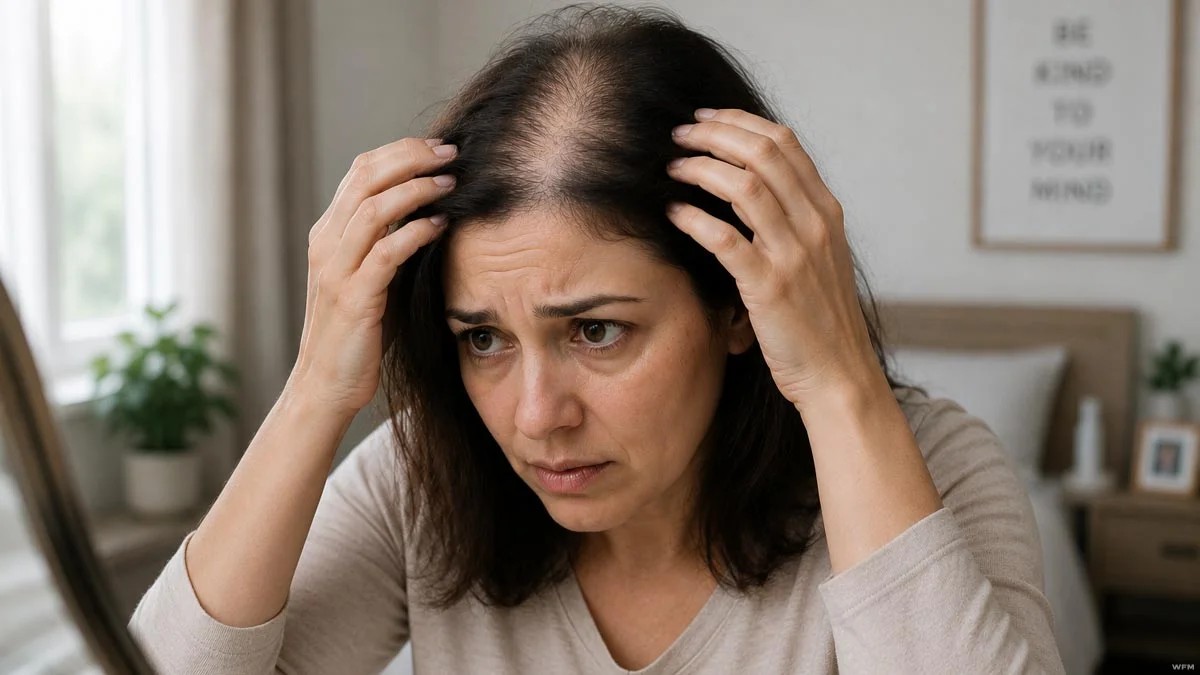
Women don’t just wake up bald. It’s subtle. A wider part. Less hair in the ponytail. The pillow trap. As a dermatologist, I hear this complaint daily. “It doesn’t look right.” They ignore it at first. Hoping it’ll fix itself. But it rarely does. Thinning creeps in, slow and steady, until you can’t look in the mirror.
Ignoring it doesn’t help. Knowing why does.
It’s Not a Male Pattern
Forget receding hairlines or crown baldness. That’s usually male-pattern territory. Women lose hair differently. It spreads out. Diffuse. The volume just… evaporates. The scalp shows through, but no single spot is completely bare.
This matters. Different problem means different fix.
And it’s never just one thing. Hormones. Nutrition. Stress. Genetics. Scalp health. They all tangle up together over time.
The Hormone Tangle
Your hormones run the show. Specifically, the hair growth cycle. Small shifts? Huge impact on how long a strand stays anchored versus when it lets go.
Thyroid issues are big culprits. Too slow, too fast—it messes up the rhythm. Shedding spikes. Growth stalls.
PCOS is another one. High androgens shrink the follicle itself. Hair gets thinner, especially near the top.
Pregnancy is tricky. Estrogen surges mean hair stays thick and full for nine months. Then baby arrives. Estrogen drops. Crash. Months of shedding follow. Normal? Yes. Painful? Also yes.
Menopause? Same deal. Estrogen fades. Hair dries out, thins, loses density. Natural, but still annoying.
Starved Roots
Your body makes tough choices. If you’re starving—or just malnourished—hair goes last. Vital organs get priority. Hair? Sacrificial.
Deficiencies show up fast in shedding. Iron is number one. Ferritin levels drop, hair falls out.
Vitamin D. Zinc. B12. Protein.
Hair is protein. Keratin. No protein intake means no strong strands. Crash diets are brutal on this. Digestive issues, too. You might think you’re eating well, but your gut isn’t absorbing it.
Surprise, right? Thin hair can just mean you’re hungry on a cellular level.
A Sick Scalp Makes No Hair
You can’t grow flowers on concrete. Or healthy hair on a diseased scalp.
Dandruff. Seborrheic dermatitis. Psoriasis. Chronic inflammation. It clogs the works. Follicles get stressed, blocked, irritated. Oil builds up. Inflammation flares.
Blood flow matters too. Follicles need oxygen. Nutrients. Tight hairstyles don’t help. Pulling your hair into severe ponytails or braids stresses the scalp. Heat tools add trauma. Neglecting hygiene? Same story.
Treat the skin before you treat the hair.
Stress Breaks You
Telogen effluvium. Scary name. Simple concept: stress shocks your system. Follicles panic and enter rest mode en masse.
It takes three months to show. So, shed hair today? That’s stress from March. Or illness. Surgery. High fever. Rapid weight loss.
Grief works the same way.
Worse? Hair loss causes anxiety. Which causes more stress. Which causes more loss. Cycle.
Break it. Sleep. Exercise. Breathe. Support. It sounds cliché because it’s true.
Stop Waiting. Start Looking.
Has it been months? Sudden shedding? Don’t wait.
Go in. Get blood work. Hormones. Nutrient screens. Scalp exam.
Why wait? Follicles miniaturize over time. Once they’re gone, they’re gone. Early help stops the slide.
Quick fixes? Trends? Useless. There’s no magic serum.
It’s boring. Find the cause. Fix it. Give it time.
Why are you applying products when you don’t even know what’s breaking inside?
Maybe start there.