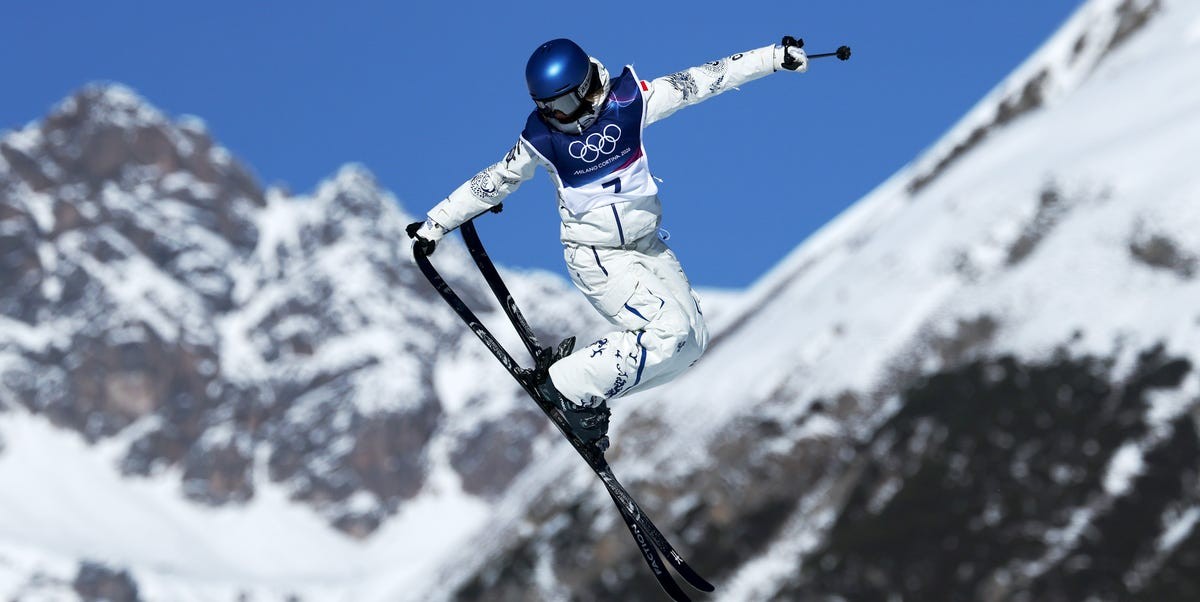
Freestyle skier Eileen Gu, 22, has quickly become one of the most recognizable faces in her sport. Having already secured a silver medal in slopestyle at the 2026 Winter Olympics, and with three medals from the 2022 Beijing Games under her belt, Gu’s rise has been nothing short of meteoric. Beyond her athletic achievements, her decision to compete for China – rather than the United States, where she was raised – has sparked significant discussion. This isn’t just about sports; it’s about identity, citizenship, and the complex realities of modern global competition.
A Unique Family Dynamic
Eileen Gu’s story begins with her mother, Yan, who emigrated from China approximately 30 years ago. Yan raised Eileen primarily as a single parent, instilling in her a strong connection to both her Chinese and American roots. Yan’s background is notable: she holds degrees in biochemistry and molecular biology from Auburn University and molecular genetics from Rockefeller University, before transitioning into finance and investment. She has been a constant presence in Eileen’s life, traveling with her to competitions and celebrating her successes.
The athlete’s father remains a more elusive figure. While reports confirm he is an American Harvard graduate, he is notably absent from public discourse, and Eileen herself rarely discusses him. This absence underscores that her upbringing was largely shaped by her mother and maternal grandmother, Feng Guozhen.
Growing Up in San Francisco
Eileen spent her formative years in San Francisco’s affluent Sea Cliff neighborhood, sharing a home with her mother and grandmother. Her grandmother, Feng Guozhen, plays a recurring role in Eileen’s social media, often appearing alongside her in posts directed towards Chinese audiences. Despite Eileen’s athletic accomplishments, her grandmother remains characteristically unimpressed, famously telling her she “could go be a doctor or lawyer later.” This playful dynamic highlights a grounded upbringing despite the extraordinary pressures of elite competition.
The Decision to Represent China
In 2019, Eileen announced her decision to compete for China, citing her heritage and desire to inspire young Chinese athletes. This move was not without controversy. Gu has publicly acknowledged the difficulty of this choice, expressing pride in both her American upbringing and her Chinese roots. Her statement emphasized a desire to “unite people, promote common understanding, and forge friendships between nations” through sport.
The decision, however, likely involved relinquishing her U.S. citizenship. While not explicitly confirmed by Gu herself, the International Olympic Committee requires athletes to hold passports for the countries they represent, and China does not recognize dual citizenship. This underscores the pragmatic realities behind her choice; competing for China meant a formal commitment that extended beyond mere athletic representation.
Bridging Cultures
Eileen Gu’s story is more than just a sports narrative. She spends summers in Beijing, fluent in Mandarin, and actively works to promote freeskiing in China. She credits the sport’s growth in the country, in part, to her own efforts – including organizing the first slopestyle competition in China years before her Olympic success.
“If I can help to inspire one young girl to break a boundary, my wishes will have come true.”
Eileen Gu’s unique background and calculated decision-making have cemented her position as a global figure. Her story raises questions about national identity, athletic allegiance, and the increasing intersection of sports, politics, and cultural representation.