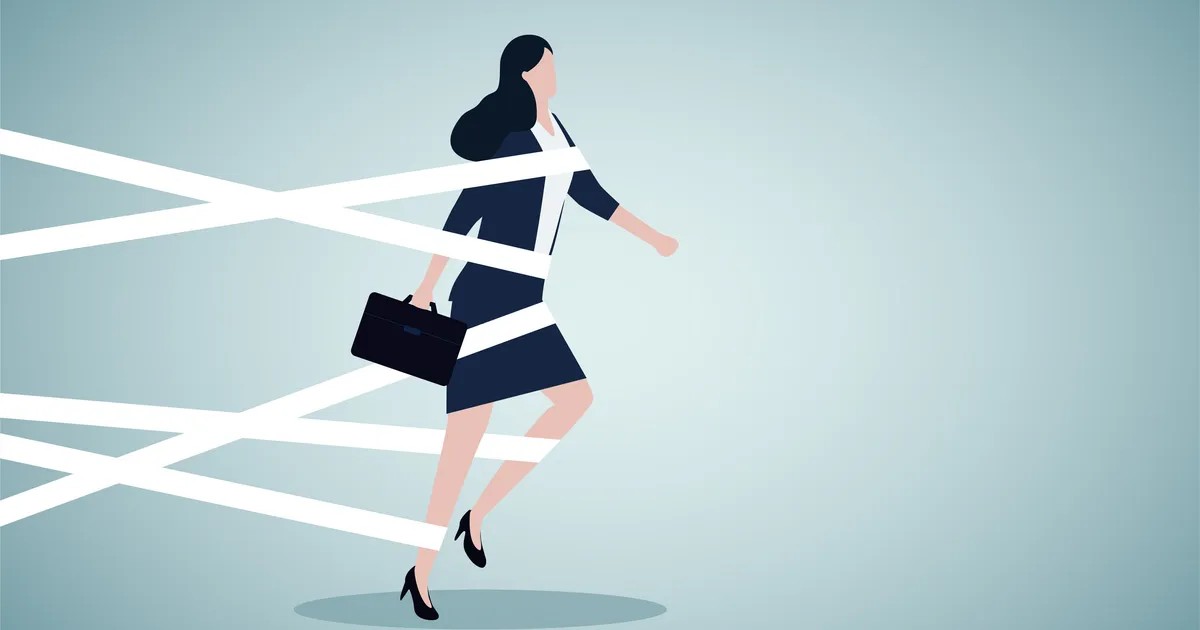
Men hit a professional peak in their 40s.
It’s a documented phenomenon. They’re seen as mature. Committed. The “fatherhood bump” is real — a pay increase triggered not by better performance, but by the subconscious assumption that raising a child makes a man more stable. As they age, their wisdom is curated like a fine wine. Colleagues seek their mentorship.
Women? Not so much.
According to new research from Harvard Business Review, age isn’t just a neutral marker for women. It’s a liability. The data is infuriatingly clear: there is no mythical prime for women in the corporate world. Just a shifting baseline of dismissal.
The Double Bind of Career Ageism
Amy Diehl, Leanne Dzubinski, and Amber Stephenson surveyed 913 female leaders across higher education, healthcare, law, and nonprofits. The goal? To map the specific contours of the bias women face. The findings, currently undergoing peer review, expose a brutal double bind.
Women under 40 are viewed as inexperienced. Too green. Their credibility is questioned.
Women over 40? Suddenly they’re “too old.” Or worse, “too much.”
“There was always an an excuse to not take women seriously… to discount their opinions, or not hire them.”
This isn’t just a feeling. It’s a structural pattern.
In the study, middle-aged women (defined here as 40-60) were consistently labeled “difficult to manage.” They carried a perceived burden of “family responsibility” that their male peers never had to shoulder. If a man has kids, he’s a provider. If a woman has kids, she’s a distraction.
“I was too young, and then overnight I was too old,” one participant told Diehl. That sentiment wasn’t an outlier. It was the rule.
Menopause, Management, and the “Difficult” Label
Why are women in their late 40s and 50tes specifically targeted?
The survey revealed that search committees openly discussed dropping female candidates due to “impending menopause” or “menopause-related issues.” One college leader cited these factors as reasons to pass on female candidates, even when the job was subsequently awarded to a similarly aged man.
Let that sink in.
Biological processes are cited as valid hiring criteria for women, while ignored entirely for men. The result? Men remain in their “prime” while women are prematurely categorized as “old” and difficult.
“Whenever you’re perceived as middle-aged, you’re perceived as having family issues, menopause issues, or being difficult to manage,” Diehl noted.
It’s a social license for discrimination. Ageism remains one of the last acceptable prejudices. We joke about it. We normalize it.
“We are far more overt in how we comment about age or make jokes about age,” said co-author Stephenson.
The Threat of Competence
There’s another layer to this.
As women age, they stop apologizing. They gain confidence. They learn their value. And for some men, that’s a problem.
Diehl points out that as women mature, they lose the “fear of speaking their mind.” That shift is threatening to leaders who prefer compliance over competence.
“Men will allow women… to the extent that women are compliant… and they don’t push back.”
Nancy Hanks, a senior management consultant, saw this play out in her own career. When she was 29 and an elementary school principal, her expertise was ignored. In her early 40s, she faced a different barrier.
“Now that [confidence] is seen as a threat,” Hanks explained.
She described it as a “dirty little trick.” You spend decades building experience, gaining expertise, and taking up space. And just as you become a strong leader, those exact traits are weaponized against you. Your assertiveness is recoded as aggressiveness. Your experience is recoded as rigidity.
Who Bears the Burden of Change?
The data suggests this isn’t a problem women can solve by working harder. It’s a cultural failure that requires systemic intervention.
Hanks argues we need to stop treating ageism as harmless banter. “Anything that allows us to build on existing biases is going to be really hard,” she said, noting it’s even harder for those already marginalized.
Diehl offers a specific call to action for allies: intervene in real-time.
In the case of the search committees mentioned earlier, the biased comments were made when the female candidates weren’t in the room. The women couldn’t fight back. The bias stood unchallenged.
“Allies need to stand up in the moment,” Diehl said. “‘Hey, that’s not right.’”
The Value of Aging
Perhaps the most frustrating part of the research is the psychological toll it takes. Age discrimination doesn’t just block promotions; it erodes self-worth.
Stephenson warns that middle-aged women often internalize this bias. They start believing their contributions are less relevant. That’s a trap.
The onus isn’t on women to fix a broken narrative. But remembering their value is a survival mechanism in a hostile environment.
You aren’t “too much.” You’re exactly as experienced as you need to be. The problem isn’t your age. It’s the lens through which it’s viewed.
And until that lens cracks, the cycle continues.