It’s not the first fruit that comes to mind when you think of global trade. You won’t find boxes of it in regular American supermarkets. However, in tropical and subtropical regions sapodilla (Manilkara zapota ) has a quiet but fierce loyalty. This evergreen tree is native to southern Mexico, Central America, and the Caribbean, and produces fruit that is rarely exported but prized where it grows.
The story here goes way beyond the snack aisle. Long before it became a modern collector’s curiosity, it was the backbone of the chewing gum industry. The tree exudes a milky latex called chicle. This juice was the main source of chewing gum base for centuries. The Aztecs already chewed it for fun. Although synthetic substitutes dominate the market today, the historical weight of chicle from sapodilla remains a fascinating footnote in botanical and industrial history.
More than a sweet fruit
As a cultivated species, the sapodilla tree is medium in size. It grows slowly. The wood itself is reddish, hard and surprisingly durable. You can see this history even today in the Mayan ruins, where intricately carved lintels made from sapodilla wood have survived for around 1000 years. This longevity speaks to the density and durability of the material.
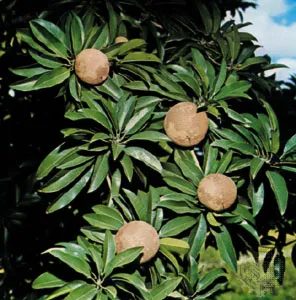
The leaves of the tree are shiny and light green. They range from oval to elliptical in outline and are 5–12.5 cm (2–5 in) long. The flowers are small. Inconspicuous. They don’t steal the show. The fruit does.
Sapotilla fruits are spherical or egg-shaped. Its surface is rust brown and feels rough. The diameter is typically 5-10 cm (2-4 inches). Inside, the flavor profile is unique. It has been described as a combination of pears and brown sugar. Sweet? Yes. But with a depth that simple sugars lack.
How to eat it (and why you need to wait)
Timing is everything. Unripe sapodilla is not edible. It contains tannin and milky latex that makes your mouth pucker and dry immediately. You have to wait for maturity.
When the fruit is ready, the flesh becomes translucent and yellow-brown. It is juicy and soft. Inside are two to five shiny black seeds. They look like flat beans. They surround the edible pulp. The contrast between the hard, shiny seeds and the soft, sweet flesh is part of the experience.
Reproduction and growth
If you want to breed one, know that it is patient. Propagation is usually through seeds. But if you want quality, look for grafting. In this way, high quality trees can be produced. It ensures that the taste and properties of the mother plant are preserved.
Sapodilla does not dominate the global market. It doesn’t need to. It is valued in the areas where it thrives. Fresh. Sweet. Historically significant. A small tree with a big impact.