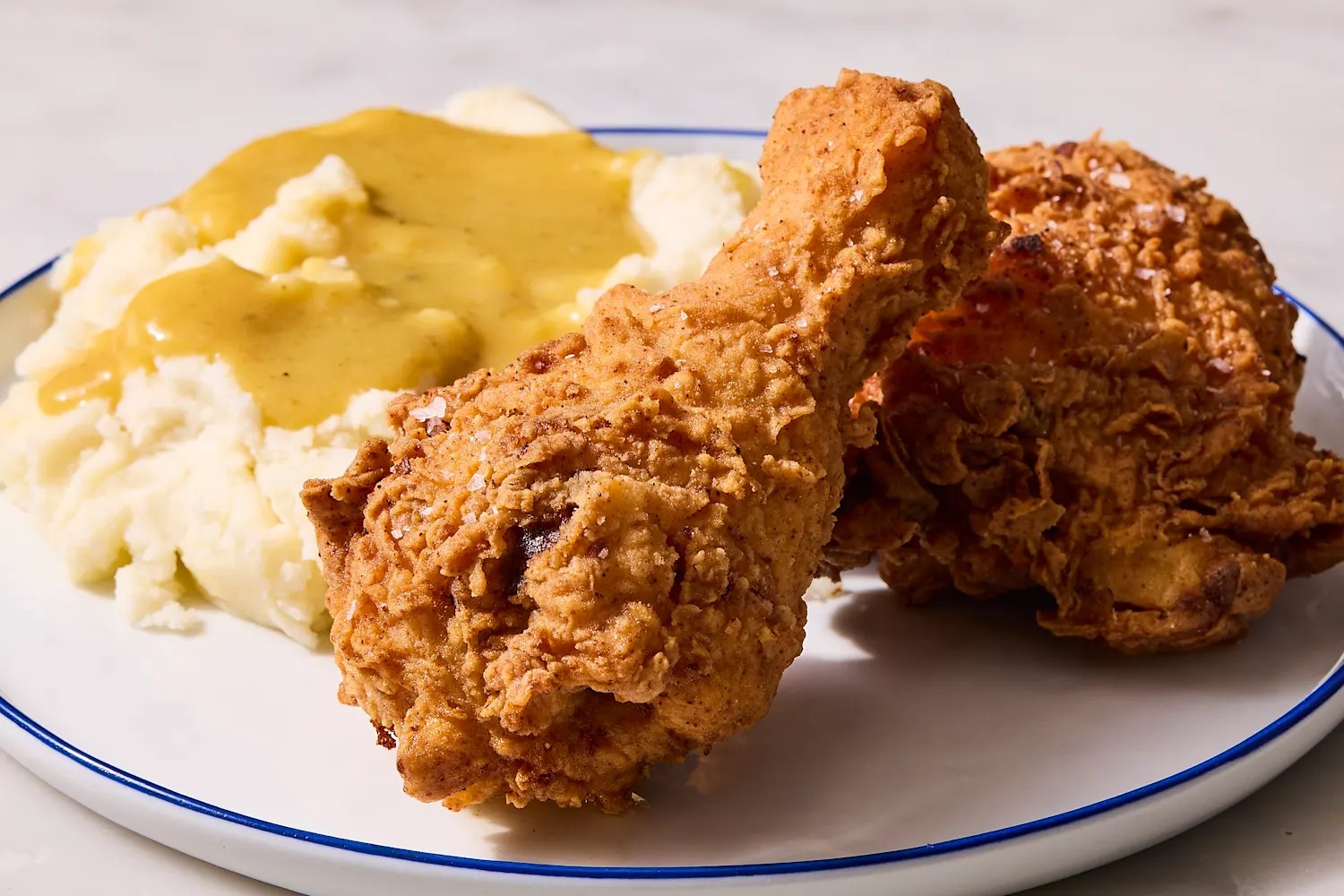
For many home cooks, the idea of frying chicken from scratch feels daunting. It involves hot oil, precise temperatures, and the fear of a soggy or burnt result. This is why fast-food chains like Popeyes hold such a strong appeal—they offer a consistent, golden-brown, spicy crunch that seems impossible to replicate in a standard kitchen.
However, achieving that specific “Louisiana-style” flavor profile doesn’t require a commercial fryer or secret industrial ingredients. By understanding the chemistry behind the crust and the brine, you can produce fried chicken at home that rivals—or even surpasses—the restaurant version. The key lies in a double-dredge technique and a buttermilk brine that tenderizes the meat while infusing it with flavor.
The Science Behind the Crunch
The secret to Popeyes’ signature texture isn’t just the spices; it’s the method. A single coating of flour often results in a smooth, cake-like crust. To achieve the characteristic craggy, crinkly exterior, this recipe utilizes a double-dredge process.
- The Brine: Chicken thighs and drumsticks are marinated overnight in a mixture of buttermilk and hot sauce. The acidity in the buttermilk breaks down muscle fibers, ensuring the meat remains juicy and tender, while the hot sauce provides a baseline of savory heat.
- The Dry Mix: A combination of all-purpose flour and cornstarch is essential. While flour provides structure, cornstarch absorbs moisture and creates a shatteringly crisp texture that stays crunchy longer.
- The Wet Wash: Between the two layers of flour, the chicken is dipped in a mixture of eggs and cold sparkling water. The carbonation in the sparkling water creates tiny bubbles in the batter, which expand during frying to form those signature ridges and cracks in the crust.
Step-by-Step Preparation
1. Brine the Chicken
Start by combining 2 cups of buttermilk, 2 tablespoons of Louisiana-style hot sauce (such as Crystal or Frank’s RedHot), and 2 teaspoons of kosher salt in a large zip-top bag or container. Add 8 bone-in chicken pieces (a mix of drumsticks and thighs works best for flavor) and ensure they are fully submerged. Refrigerate for at least 4 hours, though overnight is ideal for maximum tenderness.
2. Prepare the Stations
Safety and organization are crucial when working with hot oil.
* Fryer: Heat 8 cups (2 quarts) of peanut or vegetable oil in a heavy Dutch oven or deep pot to 325°F (163°C). Use a thermometer to monitor the temperature, as it will drop when chicken is added.
* Breading Station: In a large bowl, whisk together 2 cups of all-purpose flour, ½ cup of cornstarch, 1½ teaspoons of garlic powder, 1½ teaspoons of onion powder, 1½ teaspoons of paprika, ½ teaspoon of cayenne pepper, the remaining 1 teaspoon of kosher salt, and ¼ teaspoon of black pepper.
* Wet Bowl: Whisk 3 large eggs with 1½ cups of cold sparkling water in a separate medium bowl.
* Landing Zone: Set up a wire rack on a baking sheet lined with paper towels nearby. Have tongs or a spider skimmer ready.
3. The Double Dredge
Remove the chicken from the brine and pat it dry with paper towels—this is critical for the breading to adhere.
1. First Coat: Dredge the chicken in the flour mixture, shaking off any excess.
2. Wet Dip: Dip the floured chicken into the egg and sparkling water mixture, letting the excess drip off.
3. Second Coat: Press the chicken firmly back into the flour mixture, ensuring a thick, even coating. Place on a clean rack or sheet while you heat the oil.
4. Fry to Golden Perfection
Carefully lower 2–3 pieces of chicken into the hot oil. Do not overcrowd the pot, as this lowers the oil temperature and leads to greasy chicken.
* Fry for 13–15 minutes, turning every 3–4 minutes, until the internal temperature reaches 165°F (74°C) and the exterior is deep golden brown.
* Adjust the heat to maintain the oil at 325°F.
* Transfer the cooked chicken to the wire rack and keep warm in a 200°F oven.
Pro Tip: Let the chicken rest for 5 minutes before serving. This allows the juices to redistribute and the crust to set firmly, preventing it from sliding off when you take a bite.
Nutritional Context and Serving Suggestions
While homemade fried chicken allows for control over ingredients, it is still an indulgent dish. A single serving in this recipe is high in calories (approx. 2,310 per serving if calculating the whole batch) and sodium, primarily due to the frying oil and salt-heavy brine. It is best enjoyed as an occasional treat rather than a daily meal.
What to Serve With It:
To balance the richness of the fried chicken, pair it with lighter, acidic sides:
* Coleslaw: The crunch and vinegar tang cut through the fat.
* Red Beans and Rice: A classic Southern companion that adds substance without additional frying.
* Biscuits: For a complete comfort-food experience.
Storage:
Leftovers can be stored in an airtight container lined with paper towels in the refrigerator for up to 4 days. To restore crispiness, reheat in an oven or air fryer rather than a microwave, which will steam the crust and make it soggy.
Conclusion
Making Popeyes-style fried chicken at home is less about complex culinary skills and more about respecting the process: brining for tenderness, using cornstarch for crunch, and employing a double-dredge for texture. By following these steps, you can enjoy a meal that satisfies the craving for fast-food flavor while offering the superior quality and freshness of a homemade dish.